




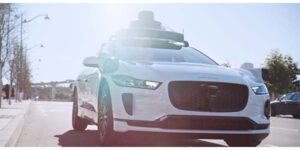
Currently, it’s possible to hail a robotaxi in about a half dozen cities in the US, but that is expected to rise to about 15 or more cities next year.
12-volters will want to know how robotaxis will eventually impact sales of aftermarket in-car infotainment.
This depends on when robotaxis will significantly cut into car ownership. At some point it may be easier and cheaper to hail a robotaxi using an app for everyday transportation than handling car payments, auto insurance and repairs. A McKinsey report, published earlier this year, expects it may be cheaper for about half of city dwellers to rely on robotaxis for transportation versus owning a car by 2035.
Take a city the size of Washington, DC (690,000 residents). Owning a car in that city is more cost effective than using ride hailing services like Uber that require human drivers if you need to travel more than 2,000 miles a year. But once robotaxis don’t require drivers, car ownership is more cost effective only if you need to travel more than 7,500 miles a year, said McKinsey.
It concludes, “This means that, from a purely economic perspective, car ownership would no longer be viable for 50 percent of people in a major city—provided that robotaxi operating costs continue to decline.”
But what about the aftermarket?
Automotive expert Steve Greenfield of the Automotive Ventures report gave us a perspective on the aftermarket and robotaxis.

First, car ownership outside of major cities is going to be less impacted by robotaxis.
Second, Waymo and Tesla, two dominant players, have different approaches to the market, which will impact the aftermarket differently.
Waymo, at present, owns its fleet. It has 1,500 automated vehicles (AVs), expected to grow by another 2,000. Those vehicles might be outfitted for entertainment by some entity, either OEM or possibly, aftermarket.
Tesla’s approach is different. “Musk wants to democratize ownership of automated vehicles (AVs). Anyone who owns a Tesla may use it for personal use, but you might also permit that vehicle to leave your driveway at night and drive other people around…” said Greenfield.
He continued, “Teslas in people’s driveways might be a source of additional income. If you believe that vision, suddenly, instead of a couple of thousand [AVs] on the road, you could have Teslas running on the streets at all hours, which, for the aftermarket, is a bigger opportunity.. You now have a personal vehicle that becomes part of a fleet. If that future is realized, it’s more accessible for the aftermarket to be upgrading those cars.”
There are still many obstacles to deployment of robotaxis. To date, they have been operated in cities only with temperate climates, as snow and inclement weather can block sensors. Greenfield notes that snowbanks on the side of the road could derail a robotaxi (the snow isn’t on its operating map so the robocab would pull over). Also, salt and ice might block sensors.
Waymo, the AV leader is deployed in Phoenix, San Francisco, Los Angeles, Atlanta, and Austin, as well as Miami. Waymo deployment will also start in Dallas, Houston, San Antonio and Orlando, and Nashville next year as well as London. Tesla offers limited robotaxi rides in Austin and San Francisco (but must have drivers in San Francisco due to regulations).
Lyft is currently in Atlanta.
Zoox, a subsidiary of Amazon, is operating robotaxis in Las Vegas. Uber plans to launch its robotaxi service in San Francisco next year.
Waymo said it clocks 250,000 paid trips each week covering over 700 square miles in the US.
source: https://www.ceoutlook.com/2025/11/24/a-12v-look-at-robotaxis/
